Daewangam Park

This is an independent non-profit guide put together by keen travellers, offering the most objective information on visiting Daewangam Park — free of charge and affiliated with no organization.

All attraction information on this site is checked against public materials from Ulsan Metropolitan City, Dong-gu Ulsan, and the Korea Tourism Organization (VisitKorea), with no commercial recommendations.

⭐ 4.6 (5,406) · 5,406 reviews

Daewangam Park (대왕암공원)

A coastal cliff park on the East Sea in Dong-gu, Ulsan. A 303 m sea suspension bridge (출렁다리) soars across the water, linking the pine-forest shore to the jagged Daewangam islet. In the fuller legend, King Munmu of Silla became a guardian sea dragon off Gyeongju, while his queen consort became the female guardian dragon associated with these Ulsan rocks, together watching over the East Sea. Pine, lighthouse and sunrise meet here; the park is free and open 24 hours.

Highlight Sea bridge
Admission Free
Hours Open 24 hours
🌤️ Current weather: 🌅 Today's sunset:

King Munmu of Silla is said to have become a guardian sea dragon off Gyeongju after death; his queen consort, too, vowed to become a female guardian dragon and to rest beneath the rocks of Ulsan's Daewangam, together guarding the East Sea.

— The Silla court's twin guardian-dragon legend

Golden Hour Calculator · Light tool

Based on today's sunset, arriving about 60 minutes earlier lets you catch the softest diffuse light and the blue-hour sky — perfect for shooting the bridge, Daewangam rock and the East-Sea sunset.

The park faces the sea on three sides and is wide open; afternoon to dusk gives the warmest light. On weekends or fine weather, allow extra buffer for crowds.

🌊 Sunrise tip: Daewangam faces the East Sea and is a popular Ulsan sunrise spot. The first light on the rocks and cables is the golden window; winter mornings are cold — mind the sea breeze.

Light data computed live by Open-Meteo

Suggested arrival

Blue hour

Know Daewangam in numbers · Data board

A few numbers to understand this pine forest park on the East-Sea cliff.

Bridge / Bridge

303 m long

A 303 m sea suspension bridge (출렁다리) links the shore to the Daewangam islet — Ulsan's first suspension bridge and its most recognizable landmark, free to cross and gaze over the sea.

Legend / Legend

Queen consort's dragon

A more careful telling separates the two sites: King Munmu became a guardian sea dragon off Gyeongju, while Ulsan's Daewangam is more closely tied to the queen consort's female guardian-dragon legend; together they form a twin guardian-dragon memory of coastal defence.

Landscape / Landscape

Pine cliff coast

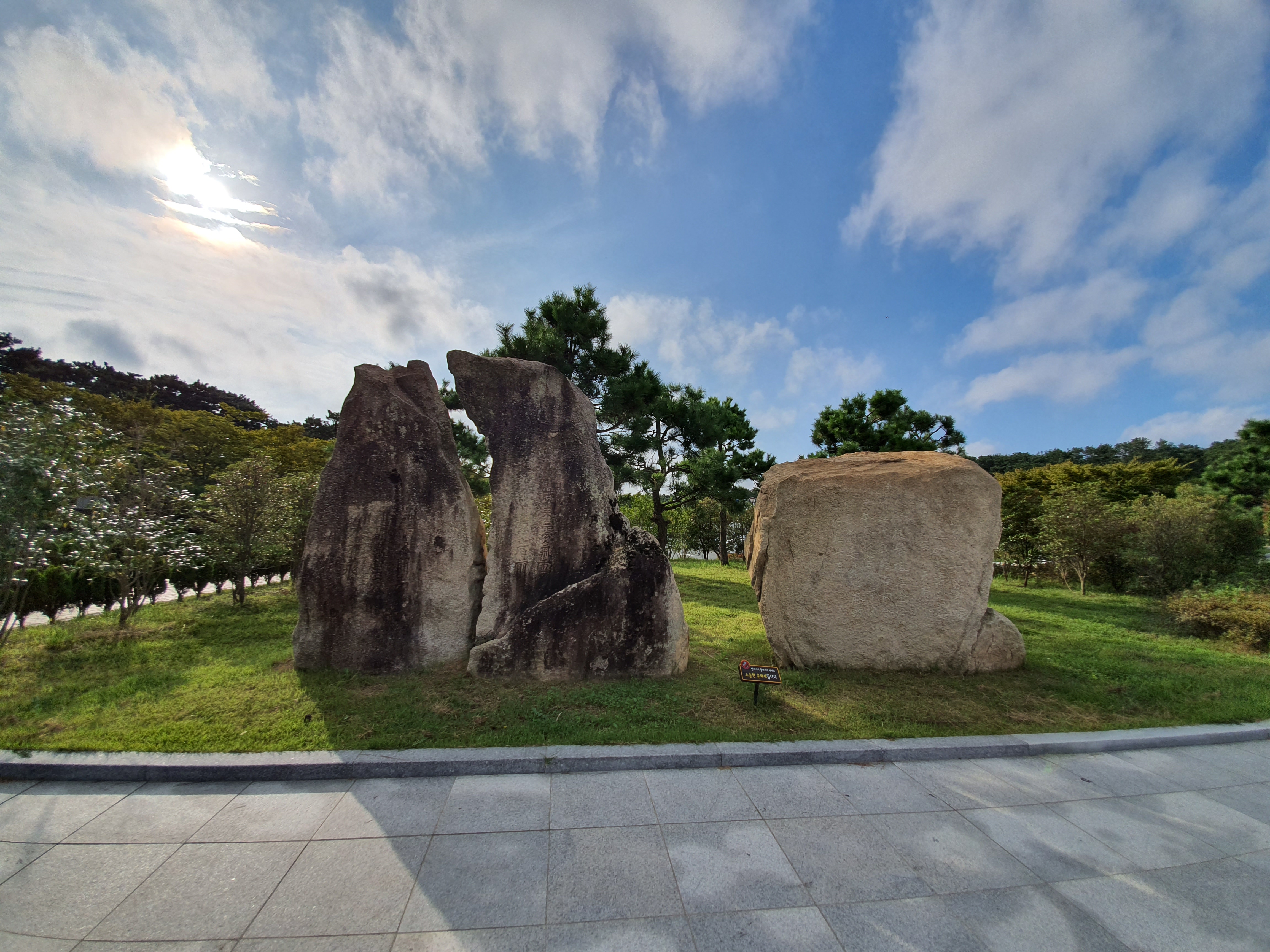
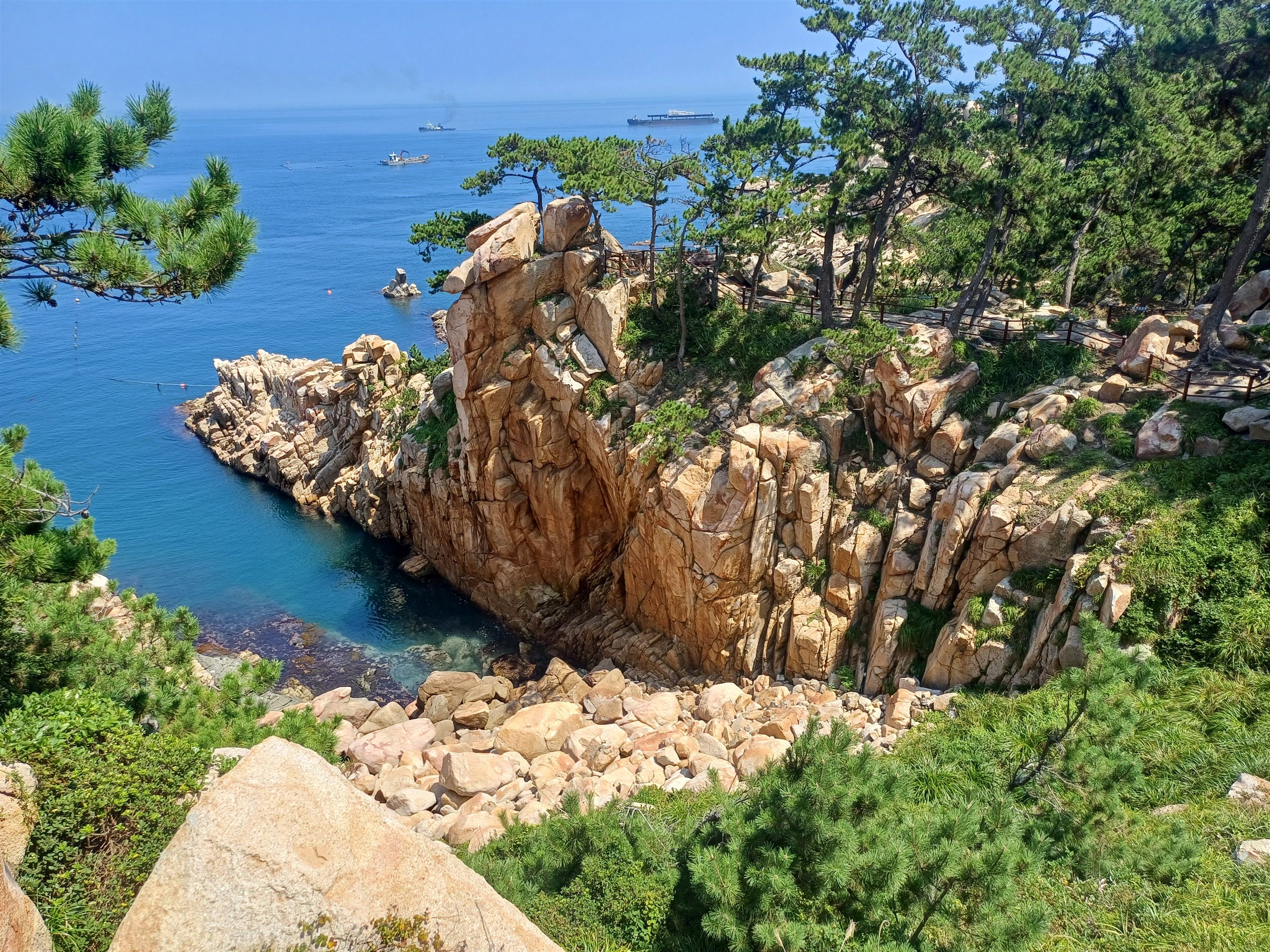
A pine forest trail runs along coastal cliffs on three sides of the East Sea, with sea-eroded rocks like the Hat Rock and the Phallus Rock, and a view to the Ulgi Lighthouse.

Lighthouse / Lighthouse

Ulgi Lighthouse

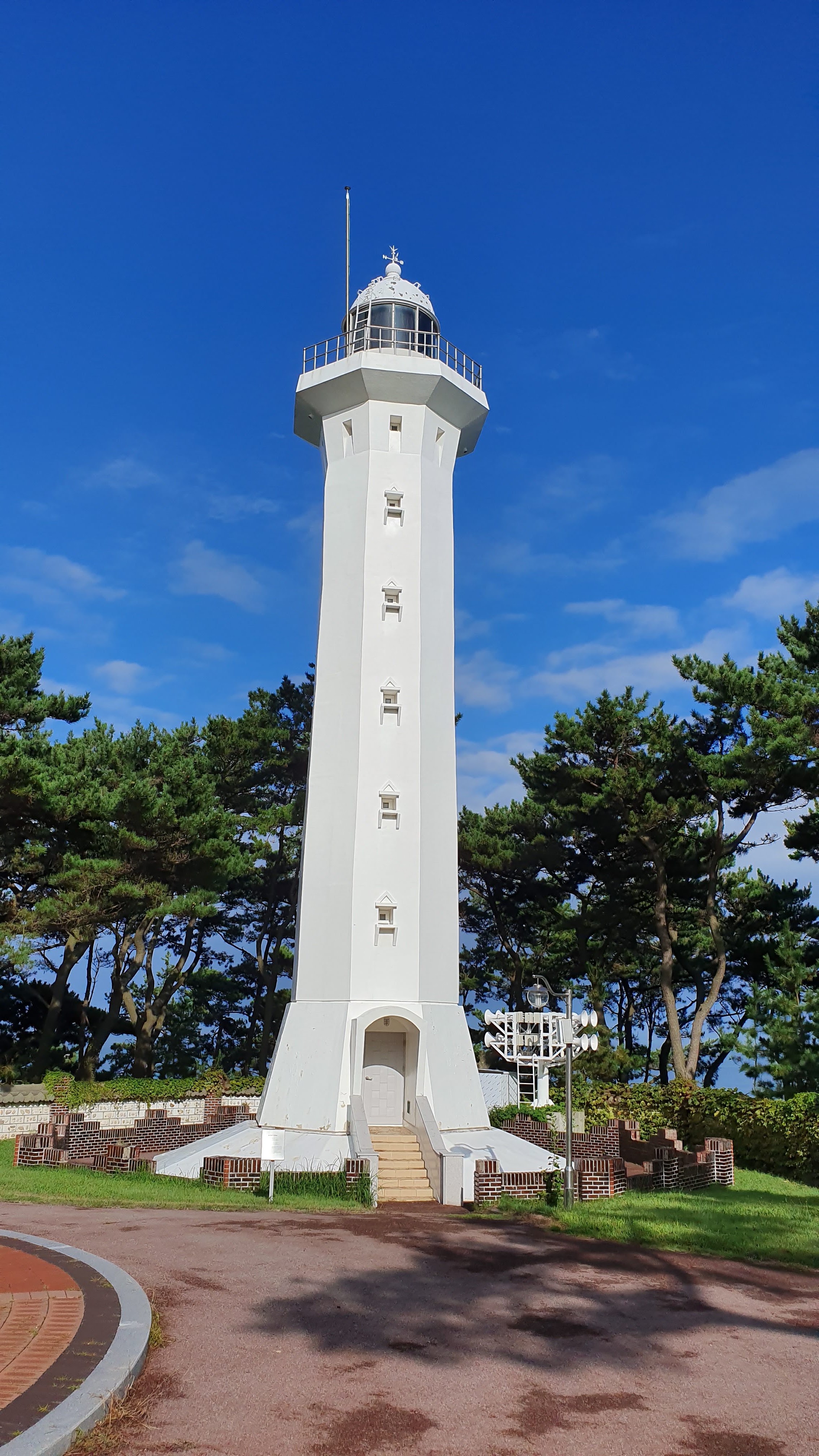
The Ulgi Lighthouse (울기등대) inside the park is among the earliest modern lighthouses in Korea, and a classic spot for East-Sea and sunrise views.

Coordinates / Coords

35°32′N, 129°21′E

Plus Code: FCRQ+XR, Ulsan. Address: 95 Deungdae-ro, Dong-gu, Ulsan, South Korea.

Admission / Admission

Free

The park is free and open 24 hours; the sea bridge is also free to cross, managed by Dong-gu, Ulsan — easy to drop by anytime.

Getting to know Daewangam Park

Daewangam Park (Korean: 대왕암공원) sits on the East Sea in Dong-gu, Ulsan — a pine forest park built along coastal cliffs. A 303 m sea suspension bridge (출렁다리) links the jagged Daewangam islet to the shore; the bridge is free to cross and gaze over the sea. Facing the East Sea on three sides, with pines and waves and the Ulgi Lighthouse standing among them, it carries a court legend more precisely read as a twin guardian-dragon story: King Munmu became a guardian sea dragon off Gyeongju, while the queen consort came to be associated with Ulsan's Daewangam rocks.

About this coastal park

Daewangam Park is on the East Sea in Dong-gu, Ulsan — a citizen coastal park grown from seaside woodland and sea-eroded landforms, maintained by Dong-gu, Ulsan as public space. It has long been a seaside living-room shared by citizens strolling, travellers pilgrimaging and families, and is one of Ulsan's 'pine, bridge and legend' city cards.

Highlights

  • 303 m sea suspension bridge, free to cross, soaring over the sea — Ulsan's most recognizable coastal landmark
  • A site read through the Silla court's twin guardian-dragon legend, where coastal-defence memory meets natural landforms
  • Pine forest cliff trail on three sides of the East Sea, with views to the Ulgi Lighthouse and sunrise
  • Sea-eroded rocks like the Hat Rock and Phallus Rock, an open-air geology lesson with plaques
  • Park open 24 hours free, bridge free, managed by Dong-gu, Ulsan — visit anytime

Humanities & coastal defence: from King Munmu to the queen consort's dragon

Place Unified Silla history, the twin guardian-dragon legend of King Munmu and his queen consort, the modern bridge engineering and the sea-eroded landforms on one timeline to understand why this park is more than 'pretty cliffs'.

1

King Munmu and the queen consort's twin guardian dragons

The core legend at Daewangam is better understood as more than a simple 'Munmu became a dragon' story. Historically, King Munmu (문무왕) is tied to the sea tomb off Gyeongju, where he became a guardian sea dragon; Ulsan's Daewangam is more closely linked to the queen consort's local legend as a female guardian dragon resting beneath these rocks. Taken together, they form a fuller memory of twin guardian dragons defending the East Sea.

2

The name 'Daewangam'

'Daewang (대왕)' is tied to the coastal-defence memory of the Unified Silla court. For visitors, the key distinction is this: Gyeongju's Daewangam is associated with King Munmu's sea tomb, while Ulsan's Daewangam more often carries the queen consort's local dragon legend, binding place name, rocks and memory together.

3

303 m sea suspension bridge

The sea suspension bridge (출렁다리) linking shore and islet is 303 m long — Ulsan's first suspension bridge and its most iconic modern structure. The deck sways with the sea breeze; it is free to cross and gaze over the sea, the park's most photogenic spot.

4

Ulgi Lighthouse (울기등대)

The Ulgi Lighthouse inside the park is among the earliest modern lighthouses in Korea, standing on the East Sea — a symbol of maritime safety and a classic spot for sunrise and seascape, forming the skyline with the pines and bridge.

5

Pine coast & sunrise

Daewangam faces the East Sea on three sides, with a pine trail along the cliffs, wind through the trees and waves in your ears. Facing east, it is a popular Ulsan sunrise spot; the first light on the rocks and cables is the golden window.

6

Sea-eroded rocks & geology class

The park shows sea-eroded rocks like the Hat Rock and Phallus Rock, with official plaques — an open-air coastal geology class. Together with Daewangam they tell the millennia-long dialogue of waves and stone, a living lesson where nature and culture meet.

7

The twin guardian dragons today

The twin guardian-dragon legend of King Munmu and the queen consort has not faded with history but is retold through Daewangam, the plaques and citizens' walks. It lets the public sense what this land went through while visiting, and how local storytelling preserved coastal-defence memory into the present — exactly the value a non-profit science site should amplify.

Did you know?

Daewangam is more than a coastal park — it is an open-air classroom of Korea's coastal-defence memory and folk legend: from the twin guardian-dragon story of King Munmu and the queen consort, to the 303 m sea bridge, to the Ulgi Lighthouse and sea rocks, land and legend written into one East-Sea cliff.

Reading the on-site signs

What's worth reading slowly on-site isn't the check-in board, but the official plates and maps explaining 'why this rock is here'.

The readings below are based on Daewangam, bridge and lighthouse introductions, legend notes and coastal guides set by Ulsan Metropolitan City and Dong-gu, turning visible-but-unread info into understandable English science.

Park history plate

Daewangam Park & the East Sea

대왕암공원 연혁

Daewangam Park history

📍 On-site location · Park main entrance

Such plates usually give the key background: Daewangam as an East-Sea coastal park and its link to the Silla court's twin guardian-dragon legend. Reading them is lesson one in understanding this coastal landmark.

Bridge guide (KO/EN)

303 m sea suspension bridge

출렁다리 안내

Bridge guide

📍 On-site location · Bridge entrance

Plates stress Daewangam's status as a sea-bridge landmark and remind visitors: half its charm is the open sea view, half the real East-Sea waves below. They explain clearly 'why a suspension bridge'.

Ulgi Lighthouse guide

Among Korea's earliest lighthouses

울기등대 안내

Ulgi Lighthouse guide

📍 On-site location · Lighthouse viewing area

The map explains 'why this is a navigation hub'. The Ulgi Lighthouse uses the East-Sea cliff as an early route marker; with the bridge, Daewangam's design logic is clear — coastal defence and public recreation coexist.

Twin guardian-dragon marker

The queen consort & the female guardian dragon

호국룡 안내

Guardian dragon legend

📍 On-site location · Toward Daewangam islet

Set by Dong-gu, Ulsan, marking Daewangam's local link to the queen consort as the female guardian dragon, while echoing the wider Munmu-at-sea motif. It reminds every visitor: this rock connects one of Korea's most moving coastal-defence legends with one of its clearest sea views.

Coastal defence & city: pine, bridge and dragon

Look past the surface 'pretty' to find what's rare here: a public coastal greenbelt, a coastal-defence legend, and an open-air city sea-watching classroom all at once.

🛕

Coastal-defence memory in the rocks

King Munmu and the queen consort's twin guardian dragons

Daewangam's hardest core is both visible and invisible. Visible: bridge and East-Sea rocks; invisible: the twin guardian-dragon narrative and Korea's coastal-defence memory. Visitors see landscape; history buffs see how King Munmu and the queen consort were placed into two linked coastal traditions, one off Gyeongju and one at Ulsan.

  • Core: coastal-defence memory, dragon legend and city geography light up this coast.
  • Key: public coastal facility turned into a low-impact, high-empathy sea classroom.
  • Meaning: it upgrades 'East-Sea greenbelt' into a public coastal-defence model.
📜

Daewangam's cultural symbol

Transparency symbol in the bridge

The bridge, pines and Ulgi Lighthouse, with the East Sea, form Daewangam's identity system: instantly saying 'Ulsan, East Sea, and a gentle transparent coastal aesthetic'. From open-sea views to sunrise gold, this contrast makes it one of Ulsan's most memorable city images.

  • Imagery: bridge, pine, lighthouse — highly recognizable.
  • Status: Ulsan's most photogenic coastal park.
  • Narrative: it translates coastal-defence themes into publicly felt aesthetic experience.

Why is this Ulsan's coastal-defence landmark?

What's most worth learning about Daewangam isn't 'it got prettier' but how it folded East-Sea sea-eroded landforms back into public coastal-defence memory while keeping reverence for nature.

A coastal living-room still used by citizens

Daewangam isn't a 'hide the coast and done' case, but a sample that keeps activating the coastal-defence landmark as shared space through public design.

  • Citizens hand daily walks and travellers' pilgrimages to this pine and bridge.
  • Public space and urban coast coexist long-term.

Writing coastal-defence ethics into visitor behaviour

Plaques, the bridge and guides aren't just navigation but let visitors quietly join respect for public environment and others while using the space.

  • Visitors are guided onto low-impact paths.
  • Viewing and public life don't sacrifice each other.

Turning coastal memory into public aesthetics

Daewangam didn't erase the legend's background; through the bridge, lighthouse and signage it lets the public sense what this land went through while visiting.

  • Story depth and viewing happen at one place.
  • Exactly the value a non-profit science site should amplify.

Who should come? From segmented guide to custom itinerary

Not just 'you'll like it' — tells you how to go, where to start, and which Ulsan nodes to link.

Families

Resonance: Free, open, safe gentle pine trail; kids gaze at the East-Sea rocks and hear the story of King Munmu and the queen consort, then easily reach the bridge on the gentle side.

Tip: Spend energy on photo stops, not on crowding.

Photographers & couples

Resonance: Morning/dusk bridge reflections are Ulsan's most romantic frames, high hit rate.

Tip: Count arrival, return and light into the plan so composition isn't beaten by the scene's pace.

Coastal-defence & history buffs

Resonance: As a coastal-defence case study, the twin-legend background of King Munmu and the queen consort, the bridge engineering and the Ulgi Lighthouse deserve close looks.

Tip: Avoid the most crowded weekends; choose morning or weekday afternoon to really observe details.

First-time visitors to Korea

Resonance: Without going far, observe Korean coastal-defence culture, dragon legend and East-Sea landforms in suburban Ulsan; link bus, local food — an ideal start for the 'pine and East Sea' theme.

Tip: If only one Ulsan suburb landmark fits, Daewangam is the best first stop for 'coastal defence and city'.

Transport & getting here

Combining arrival into Ulsan, in-city transfers, walking/cycling, parking & charging for a clearer Daewangam plan.

After arriving in Ulsan

Daewangam Park is on the East Sea in Dong-gu, Ulsan — the city's most recognizable coastal park. The easiest external transport is KTX to Ulsan (Ulsan Station / Taehwagang Station) from Seoul or Busan, or an intercity bus to Ulsan; once in Dong-gu, a city bus or taxi from Ilsan (일산) takes about 10–20 min. The park faces the sea on three sides; a short walk from the drop-off reaches the pine trail.

Daewangam is a seaside greenbelt with attached parking. Plan transport, parking and walking together — especially with seniors, kids or luggage, parking then walking saves hassle.

Remember before you go

  • The park is on the East Sea by Ilsan, Dong-gu; walk about 15–20 min from Ilsan Beach to the entrance.
  • The bridge is free to cross but closed on the 2nd Tuesday monthly and may close in strong wind/thunderstorms — check ahead.
  • Weekends and fine weather draw crowds — avoid peaks; parking is mostly paid, arrive early.
🚄

KTX / Intercity bus (to Ulsan)

External transport to Ulsan

Easiest for most — KTX from Seoul or Busan to Ulsan (Ulsan Station / Taehwagang Station), or intercity bus to Ulsan, the classic way to Daewangam.

  • -KTX from Seoul to Ulsan about 2–2.5 hr (by train).
  • -Then city bus or taxi to Ilsan, Dong-gu, about 30–50 min.
  • -Use T-money / transport card; bus and taxi connect easily.
  1. 1Take KTX or intercity bus to Ulsan.
  2. 2Transfer by city bus or taxi to Ilsan.
  3. 3Walk to the pine entrance of Daewangam Park.
🚌

City bus (to Ilsan / Daewangam)

City bus to the east coast

Flexible — take a Ulsan city bus to Ilsan (일산), then walk to Daewangam Park.

  • -City bus from Ulsan Station or Taehwagang to Ilsan Beach area about 30–50 min.
  • -Then coastal trail walk to the park about 15–20 min.
  • -Use T-money; check real-time arrival on a map app.
  1. 1Take a city bus to Ilsan / East Sea.
  2. 2Walk to Daewangam Park entrance.
  3. 3Enter via the pine trail.
🚉

Ilsan area (walk + shuttle)

Closest living area

Ilsan is the nearest living area to Daewangam; a short shuttle bus or taxi (about 10–20 min) reaches it — good for light packers.

  • -Ilsan buses are frequent, closest to the park.
  • -Transfer about 10–20 min to the main sight.
  • -Mornings and weekdays are best to avoid crowds.
  1. 1Alight at Ilsan area by bus.
  2. 2Transfer by bus or taxi about 10–20 min.
  3. 3Reach the bridge and pine coast.
🅿️

Drive (parking / charging)

Via East Sea Road · nearby parking

Good with seniors/kids/luggage or touring Ulsan; attached parking near the park (mostly paid).

  • -Navigate to '대왕암공원' or '95 Deungdae-ro, Dong-gu, Ulsan'.
  • -Attached lot is large but fills on weekends/holidays.
  • -Some public lots have EV chargers; drive slowly, park neatly.
  1. 1Set navigation to 'Daewangam Park'.
  2. 2Park in the attached lot, walk in.
  3. 3Avoid 11:00–19:00 peak to save parking time.
🚕

Taxi / ride-hail

Door-to-door

Easiest with luggage, kids/seniors or late arrival.

  • -Taxi from Ulsan Station or city center to Daewangam about 30–50 min, metered.
  • -Walk in from the drop-off near the park.
  • -Taxis queue on busy/rainy days — book via Kakao T with buffer.
  1. 1Book via Kakao T etc.
  2. 2Tell the driver '대왕암공원'.
  3. 3Alight near the park, walk in.
🚶

Walk (pine coast)

From Ilsan coast to the park

If already at Ilsan Beach or East Sea Road, walking is the most natural way to observe the greenbelt and pine landmark.

  • -From Ilsan coastal trail, walk about 15–20 min to the park.
  • -Pass pines, cliffs and lighthouse — stroll and explore.
  • -Flat surface; wear comfy shoes, watch kids and belongings.
🚲

Cycle / greenway

Coastal slow ride

The most relaxing way to feel the East Sea and pine atmosphere.

  • -East Sea Road is flat — walk to link bridge, lighthouse and coastal trail.
  • -Park bikes at racks; don't ride onto the bridge or crowded areas.
  • -About 15–20 min from Ilsan to the park, pines along the way.

Parking & charging

Daewangam has attached parking (mostly paid); below are the nearest main options. Rates and spaces vary by season/time — follow on-site signs.

Option Distance Price
Daewangam Park attached lot ~100–300 m to entrance Paid public, fills in peak
Ilsan Beach roadside lot ~300–800 m Public/paid, more spaces but tight in peak
Nearby street temporary ~200–500 m Roadside/small, fewer spots, easier on weekdays
Dong-gu park-and-ride ~1.5–3 km Park-and-ride discount, needs transfer
Drop-off (near park) ~50–100 m Drop only, no spaces

Roads near the park clog on holidays and fine weather — don't block bus/fire lanes. EV chargers are mostly in public lots; rates/limits may change — check posted signs.

Practical visiting tips

  • Morning and dusk remain golden; set 'arrive 60 min before sunset' as your baseline for the best bridge-and-rock sea reflections.
  • Weekends and fine weather draw crowds — buffer and avoid peaks with kids or gear.
  • Pair Daewangam with the Ulgi Lighthouse and Ilsan Beach; a single stop undervalues its coast and legend.

Best time to arrive

Daewangam is open 24 hours, but the photo ceiling is the sunrise and dusk light window. Arrive about 60 min before sunset; if weather hurts photos, shift focus to the pine trail or lighthouse overlook.

Transport Q&A

Is there parking near Daewangam?

An attached lot (mostly paid) is on-site, walkable. Fills easily on weekends/holidays — arrive early or prefer transit.

What's the closest parking?

The attached lot is ~100–300 m away; Ilsan Beach lot is ~300–800 m, more spaces but tight in peak.

Any roadside parking?

Little. Roads are narrow and clog on holidays — don't park long on the street; use proper lots and transit.

Should I drive to Daewangam?

Unless you need parking, don't. Weekends and fine weather are congested; walking or transit is smoother. If driving, park then walk in.

Do you recommend public transport?

Strongly. KTX/bus to Ulsan, then city bus to Ilsan and walk about 15–20 min to the park — easiest. Address: 95 Deungdae-ro, Dong-gu, Ulsan, South Korea.

What's the best way to get here?

For stability, transit wins: KTX/bus to Ulsan, transfer. If driving, treat parking and transfer as part of the plan, not 'park at the door'.

Custom itinerary: Daewangam half-day route

Not just 'who it suits' — a walkable half-day line. Centred on the pine coast and the bridge, it links the lighthouse, rocks and sunrise seascape.

  1. 01

    [Start] Pine forest trail & entrance

    Warm-up · ~30 min

    From the entrance, stroll the pine forest trail; sea wind through the trees, waves in your ears — align your pace with the East Sea, then head toward the bridge.

    • Morning/dusk light is best, fewer crowds.
  2. 02

    [Star] 303 m sea suspension bridge

    Core experience · ~40 min

    Walk the 303 m bridge; the deck sways with the sea breeze, the East Sea below, the Daewangam islet at the end. This is Daewangam's most photogenic partner and the best overlook for understanding how the twin guardian-dragon legend meets the East-Sea landforms.

    • Bridge is free to cross; allow time for photos and pauses.
  3. 03

    [Extend] Daewangam rock & sea rocks

    Local story · ~40 min

    Walk around to Daewangam rock and sea-eroded forms like the Hat Rock and Phallus Rock; use the plaques to read the fuller legend of King Munmu and his queen consort, collecting nature and memory together.

    • Rocks are slippery; stay on hard ground with company.
  4. 04

    [Refuel] Rest area & light meal

    Culture break · ~40 min

    Refuel at rest areas and snack spots near the park, then look back at the lighthouse and horizon, gathering pine, bridge and legend into one walk.

    • On-site amenities are modest — bring your own water.
  5. 05

    [End] Ulgi Lighthouse or Ilsan Beach

    Wrap · ~60 min+

    If energy allows, visit the Ulgi Lighthouse for an East-Sea overlook, or extend to nearby Ilsan Beach; otherwise walk back, wrapping the route into a complete 'pine + bridge + rock + lighthouse' half-day pack.

    • Lighthouse and sunrise are best after dawn — save the seascape for the finish.

The route emphasizes a 'works even if you just follow it' loop; if you only want the bridge, keep the first two stops and treat the rocks and rest as optional add-ons.

Tips for visiting the coastal cliff park

Daewangam faces the sea on three sides, by cliff and wave, with an elastic bridge. Think through safety, timing and budget, and the experience upgrades from 'rush to check in' to 'relaxed visit'.

Footwear safety

Wear non-slip flats

Coastal rocks and wooden decks get slippery when wet — wear non-slip shoes, avoid heels; sea breeze and dew are strong, watch children and seniors.

By the sea & cliff

Don't climb railings

Beyond the bridge and cliff railings is the East Sea — don't lean on or climb over railings, keep a safe distance when拍照, and follow on-site guidance and bridge flow control.

Weather & routine

Bring wind & water

The coast is windy, hot in summer, cold in winter — bring a windbreaker and water; the bridge may close temporarily in strong wind or thunderstorms, so check notices before going.

Is Daewangam Park paid?

The park is free and open 24 hours; the sea bridge is also free to cross — no ticket or reservation needed. Some parking lots may charge; follow on-site signs.

  • Park area is free and open anytime.
  • Bridge is free to cross; flow may be limited by weather.
Is the bridge safe? Easy with kids or seniors?

The bridge is a proper tourist facility with railings — structurally safe; but the deck sways with the wind and it is windy by the sea, so hold children's hands, support seniors and avoid windy times. The pine trail is gentle; wheelchairs and strollers can reach some viewpoints via the main path.

Can I visit in rain or strong wind?

Light rain is fine, but rocks and decks are slippery and the sea breeze is strong — wear non-slip shoes and hold the railings. In strong wind, thunderstorms or maintenance (e.g. the bridge's 2nd-Tuesday monthly closure) follow closure notices and come another day.

Daewangam · Etiquette & public-environment guide

This is both a visitor coastal park and a seaside greenbelt where Ulsan citizens walk and exercise. Following these rules is double respect for the natural coast and for others.

Take your litter with you

The park is by the sea with limited bins — bring a small bag, take it away when you leave, especially cigarette butts, plastics and food scraps, keeping the pine forest and decks clean.

Quiet & courtesy, avoid peaks

The coast is open and echoey — lower your voice, no loud music, leave room for those taking photos and pausing.

No smoking & fire safety

Some pine areas and passages are no-smoking — obey signs, don't smoke among wooden fixtures or crowds.

Respect the coastal landforms

Daewangam, the Hat Rock and the Phallus Rock are public natural heritage — don't scratch, climb or act dangerously, so this East-Sea landscape stays safe and vivid.

Lodging guide: stay close, or stay convenient

Ulsan is a port city 'where industry and ocean meet'. We don't recommend specific hotels but help you read two lodging patterns to choose.

Two choices, how to pick

🌉

Closest to park & coast

Dong-gu / Ilsan area

Staying in Dong-gu or Ilsan (일산), a short bus/car ride reaches Daewangam, the Ulgi Lighthouse and Ilsan Beach; morning sea breeze and sunrise suit travellers. Best for 'pine stroll + sea watch' with high convenience.

Commute: to park walk ~15–20 min or bus ~10–20 min. Walking is easy on legs — good for dawn bridge strolls.

  • To bridge bus/walk ~10–20 min, least walking.
  • Coast, snacks and sunrise are rich.
  • Many choices, usually better value.
🏙️

Best for food & hub

Ulsan city / Taehwagang

Staying in central Ulsan or Taehwagang (태화강), near KTX hub, shopping and food streets — best for 'sea + transfer' travellers, then bus or drive to Daewangam by day.

Commute: bus to Ilsan about 30–50 min. Good for self-drive or independent travellers wanting absolute convenience.

  • KTX hub and shopping at hand, good for transfer.
  • Food, cafés and night markets are rich.
  • To Daewangam bus/short drive ~30–50 min.

Peak-season warning

Ulsan's spring/autumn viewing seasons and fine weekend weather tighten rooms and raise prices. Book weeks ahead; if booking near a holiday, expand to Gyeongju, Busan and nearby areas, then rail or drive.

Lodging tips

  • For sunrise and bridge: prefer Dong-gu / Ilsan, walk to the park at dawn.
  • For coast & convenience: central Ulsan / Taehwagang, walk and dine at hand.
  • Before booking confirm breakfast, parking and chargers (key for self-drive).
  • Book ahead in peak/holidays to avoid no-room or high price.

How to get here

95 Deungdae-ro, Dong-gu, Ulsan, South Korea (Plus Code: FCRQ+XR) · Tel +82 52-209-3738

Frequently asked questions

Practical info on Daewangam Park's facilities, history and visit planning.

Parking
Attached lot (mostly paid)
Restrooms
Entrance rest area & public toilets
Fuel / charging
Chargers in public lot
Accessibility
Gentle trail access

Transport & infrastructure

Is there parking, and what does it cost?

An attached lot (mostly paid) is on-site, walkable. Fills easily on weekends/holidays — arrive early or prefer transit.

Are wheelchairs or strollers allowed?

Daewangam has a gentle pine trail; wheelchairs and strollers reach some viewpoints via the main path. But the bridge is windy and sways — stay on hard ground with company.

Are there restrooms or food on-site?

The park is open green space; restrooms and snacks are at the entrance rest area and nearby. Refuel water/food at the rest area before entering.

Nearby fuel or EV charging?

Public lots have EV chargers; traditional fuel stations are along Ulsan city and Dong-gu roads — self-drive visitors can refill en route.

History & science

What's the link between 'Daewangam' and King Munmu?

'Daewang (대왕)' is indeed tied to King Munmu of Unified Silla, but Ulsan's Daewangam is better not reduced to 'the place where Munmu became a dragon'. A more careful explanation is that King Munmu became a guardian sea dragon off Gyeongju, while Ulsan's Daewangam more often carries the queen consort's local legend as the female guardian dragon; together they form the cultural image of twin guardian dragons.

What's its special natural & cultural value?

Daewangam isn't a theme park but a public coastal space grown from East-Sea sea-eroded landforms — weaving coastal-defence legend, dragon symbolism, a modern bridge and pine greenbelt. The bridge, Ulgi Lighthouse and sea rocks form a low-impact, high-empathy design, and one of Ulsan's 'pine and East Sea' city cards.

Planning & tickets

Is a ticket required?

Daewangam Park is free and open 24 hours; the sea bridge is also free to cross — no gate, no ticket or reservation, visit anytime (respect the environment, no late-night noise).

How long does a visit take?

A relaxed visit is about 1–2 hr (bridge + photo stops); with the Ulgi Lighthouse and Ilsan Beach, allow a half-day.

Can I visit in bad weather?

Yes — the park is open in any weather. But in strong wind, heavy rain or thunderstorms the bridge may close; take care, wear non-slip shoes, watch the forecast; rocks are slippery when wet.

Nearby links

What else is worth visiting nearby?

From Daewangam you can link the Ulgi Lighthouse (울기등대), Ilsan Beach (일산해수욕장), the old Bang-eojin Fisheries School area and the Dong-gu coastal trail into a 'pine–bridge–rock–lighthouse' half-day coastal route.

Photo & check-in guide: Daewangam's best spots

As Ulsan's most recognizable coastal park, a few structured spots and times greatly boost your photos' usefulness and beauty.

🌅

Bridge · open-sea view

Morning Best shots

📍 Bridge middle

Morning to dusk, the deck sways with the sea breeze — Daewangam's classic 'bridge–sea' composition; backlit cables are striking.

  • Use the cables as a leading line toward the East Sea.
  • Crouch low to layer deck and sea for a steadier frame.
🌉

Sea-side railing · rock view

All day Most accessible

📍 Bridge sea side

Shooting down from the sea side folds 'bridge + East Sea + Daewangam' into one frame — Daewangam's most recognizable spot.

  • Side light on cables at morning is softest.
  • Mind your feet and crowds; don't enter closed areas for a shot.
🌉

Daewangam & sunrise

Sunrise Strongest mood

📍 Islet viewing area

The first sunrise light on the rocks is the most atmospheric window; read through the queen consort's local dragon legend, the rocks feel especially evocative in the morning glow.

  • Shoot blue hour for best sky/sea balance.
  • Frame rocks as silhouette leaving warm sea horizon.
🌃

Night lights

Night Best layers

📍 Bridge toward lighthouse

After dark, railings and deck light up; Daewangam reflects a river of lights — great for closing long-exposure night shots and coastal portraits.

  • Use lights as a leading line toward the distance.
  • Raise ISO or use a stabilizer for night frames.

Visitor quotes

“Walking the 303 m bridge with the East Sea right under my feet — that open feeling is special, and at dusk the light makes it feel like floating on the sea.”

Independent traveller · Seoul

“Free and open coastal park, a few steps from the Ulgi Lighthouse — the most underrated corner of suburban Ulsan.”

Photographer · Ulsan

“Walked the pine trail slowly with my kid, who kept looking at the rocks in the sea and listening to the story of King Munmu and the queen consort; easy for my parents too.”

Family · Daegu

Visitor reviews

Visitor feedback is available on Google Maps (external link).

M
Minjun
May 2026

Visited at dawn; the bridge backlit is super photogenic, and the bridge centre was silent — strongly recommend sunrise for the best light.

S
Seoyeon
Apr 2026

The 303 m bridge composition is stunning; about 20 min walk from Ilsan. Ulsan is windy by the sea — bring a jacket.

J
Jihun
Mar 2026

Great as free public space; weekends get crowded — weekdays or early morning are more comfortable.

H
Ha-eun
Feb 2026

About 20 min by bus from Ilsan to the park; the pine and coast along the way are pleasant for a half-day stroll.